
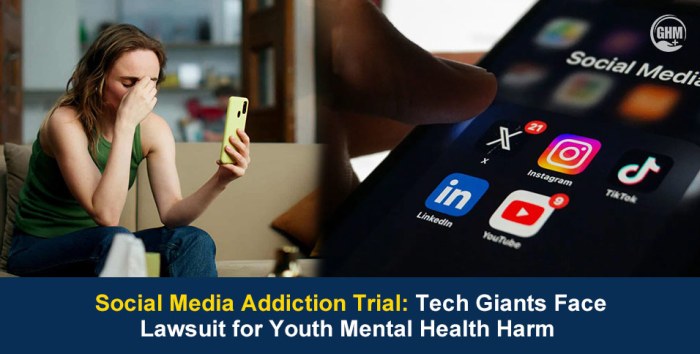
Delving into the realm of social media addiction lawsuits and the accountability of tech giants for youth mental health, this topic opens up a world of complexities and critical discussions. Readers are invited to explore the intricate web of legal actions, mental health impacts, and the role of technology in shaping the well-being of the younger generation.
The following paragraphs will dissect the nuances of social media addiction lawsuits, shed light on the legal framework, and delve into public perceptions and advocacy efforts surrounding this pressing issue.
Social Media Addiction Lawsuits Overview
Social media addiction lawsuits are legal actions taken against tech giants for their role in contributing to addictive behaviors and negative mental health impacts, particularly among youth. These lawsuits aim to hold these companies accountable for the harmful effects of their platforms on users.
Examples of Tech Giants Facing Legal Action
- Facebook: In 2020, Facebook was sued by a group of parents alleging that the platform's design features, such as notifications and auto-play videos, were intentionally designed to keep users hooked and contribute to social media addiction.
- TikTok: TikTok has faced multiple lawsuits accusing the platform of promoting addictive behaviors, particularly among young users, through its algorithm-driven content feed and gamification features.
- Snapchat: Snapchat has been targeted in lawsuits claiming that its streaks feature, which encourages users to maintain daily interactions with friends, contributes to addictive usage patterns and negatively impacts mental health.
Implications of Holding Tech Giants Accountable
Holding tech giants accountable for social media addiction can set a precedent for greater regulation and oversight of their platforms. It can also lead to changes in design practices to prioritize user well-being over engagement metrics, ultimately promoting a healthier digital environment for all users, especially vulnerable populations like youth.
Impact of Social Media on Youth Mental Health
Social media has a significant impact on the mental health of young people, with various studies and research highlighting the negative effects of excessive use.
Increased Anxiety and Depression
- Social media platforms often create a distorted view of reality, leading to feelings of inadequacy and low self-esteem among young individuals.
- Comparing oneself to others online can trigger anxiety and depression, especially when faced with curated and idealized versions of people's lives.
- Constant exposure to cyberbullying and negative comments can further exacerbate mental health issues and contribute to increased levels of stress and anxiety.
Isolation and Loneliness
- While social media provides a sense of connection, it can also lead to feelings of isolation and loneliness due to the lack of genuine, face-to-face interactions.
- Spending excessive time on social media can result in reduced social skills and difficulty forming meaningful relationships offline.
Impact on Sleep Patterns
- The blue light emitted by screens can disrupt sleep patterns, leading to sleep deprivation and fatigue among young individuals.
- Engaging with social media late at night can interfere with the body's natural circadian rhythm, affecting overall well-being and mental health.
Legal Framework and Challenges
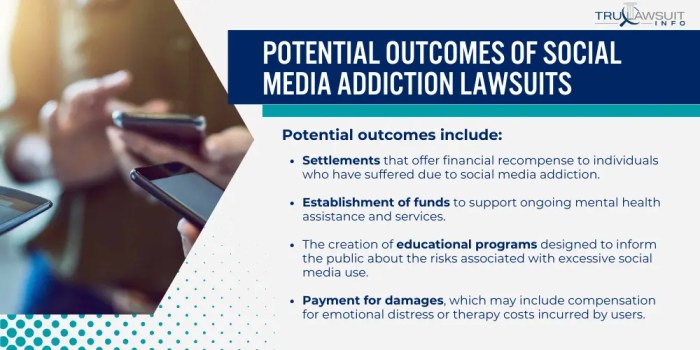
In the realm of social media addiction and its impact on youth mental health, the legal framework plays a crucial role in holding tech giants accountable and safeguarding the well-being of young individuals.
Existing Laws and Regulations
Currently, there is a lack of specific laws or regulations directly addressing social media addiction and its effects on youth mental health. Most existing regulations focus on data privacy and online safety, rather than the addictive nature of social media platforms.
Challenges in Enforcement
- The fast-paced nature of technological advancements poses a challenge in keeping regulations up to date with the latest features and algorithms that contribute to social media addiction.
- Tech giants often argue that they are platforms, not publishers, which complicates the legal responsibility they hold regarding the content and features that may contribute to addiction.
- Proving a direct link between social media use and mental health issues can be complex, as other factors may also influence an individual's well-being.
Potential Improvements to the Legal Framework
- Introducing specific regulations that address the addictive design features of social media platforms, such as endless scrolling, notifications, and targeted advertising aimed at keeping users engaged.
- Implementing stricter guidelines for age restrictions and parental controls to limit young users' exposure to potentially harmful content and addictive features.
- Establishing a regulatory body or task force dedicated to monitoring and evaluating the impact of social media on mental health, with the authority to enforce compliance and impose penalties on tech companies that violate regulations.
Tech Giants’ Responsibility and Role
In the digital age, tech giants like Facebook, Instagram, and Snapchat play a significant role in shaping the online experiences of millions of users, especially youth. With this influence comes a responsibility to prioritize the mental well-being of their users, particularly the vulnerable younger demographic.
Safeguarding Youth Mental Health
- Implementing time limit features: Tech companies can introduce tools that allow users to set daily time limits on their social media usage, helping prevent excessive screen time and promoting healthier online habits.
- Enhancing privacy settings: By providing robust privacy controls, tech giants can empower users, especially youth, to manage their online presence more effectively and reduce the negative impact of cyberbullying or online harassment.
- Introducing educational resources: Tech companies can develop educational materials or pop-up notifications that raise awareness about the potential risks of social media addiction and provide tips on maintaining a balanced digital lifestyle.
Ethical Considerations
-
Technology companies must navigate the fine line between maximizing user engagement for profit and ensuring the well-being of their users, especially the younger audience.
- Transparency in algorithms: Tech giants should be transparent about how their algorithms work to prevent the manipulation of user behavior and potential addiction triggers.
- Consulting mental health experts: Collaborating with mental health professionals can help tech companies develop strategies that prioritize user well-being and mental health over engagement metrics.
Public Opinion and Advocacy
Public opinion plays a crucial role in shaping societal attitudes towards social media addiction and holding tech giants accountable for their role in youth mental health. Advocacy efforts have emerged to address these issues and push for legal actions against tech companies.
Public Perceptions on Social Media Addiction
- Many individuals believe that social media addiction is a real and pressing concern, especially among the youth.
- Some people blame tech giants for designing platforms that are addictive and harmful to mental health.
- There is a growing awareness of the negative impact of excessive social media use on well-being and relationships.
Advocacy Efforts and Campaigns
- Various organizations and advocacy groups have launched campaigns to raise awareness about social media addiction and its consequences.
- Efforts are being made to educate parents, teachers, and young individuals about responsible social media use.
- Advocates are pushing for regulations and policies to protect vulnerable populations from the harmful effects of social media addiction.
Role of Public Awareness
- Public awareness is crucial in mobilizing support for legal actions against tech giants for their role in promoting addictive behaviors through social media platforms.
- Increased awareness can lead to public pressure on policymakers to enact laws that hold tech companies accountable for safeguarding youth mental health.
- Educating the public about the risks of social media addiction can empower individuals to make informed choices about their online behavior.
Final Summary
As we wrap up our exploration of social media addiction lawsuits and the responsibility of tech giants for youth mental health, it becomes evident that this is a multifaceted issue requiring collaboration, awareness, and legal action to ensure a safer online environment for the next generation.
Query Resolution
What are social media addiction lawsuits?
Social media addiction lawsuits involve legal actions taken against tech companies for their role in contributing to youth mental health issues through addictive features on their platforms.
How does social media impact youth mental health?
Social media can exacerbate mental health issues in young people by fostering feelings of inadequacy, anxiety, and depression due to excessive comparison and cyberbullying.
What legal challenges exist in holding tech giants accountable for social media addiction?
Enforcing regulations against tech giants poses challenges due to the global nature of social media platforms, differing legal frameworks across countries, and the need for updated legislation to address emerging issues.
What can tech giants do to reduce social media addiction?
Tech giants can implement features promoting digital well-being, provide more transparent user data access, and collaborate with mental health experts to create safer online environments.
How does public opinion influence advocacy efforts against tech giants for youth mental health?
Public awareness and perception play a crucial role in driving advocacy campaigns that push for legal actions against tech giants, compelling companies to prioritize youth well-being.