Negligent Security Attorney: Suing Property Owners for Foreseeable Criminal Acts sets the stage for this enthralling narrative, offering readers a glimpse into a story that is rich in detail and brimming with originality from the outset.
As we delve deeper into the complexities of negligent security lawsuits, we uncover the intricate web of legalities that surround property owner liability in cases of foreseeable criminal acts.
Overview of Negligent Security Lawsuits
Negligent security lawsuits involve holding property owners accountable for failing to provide adequate security measures to prevent foreseeable criminal acts on their premises. When property owners neglect to take reasonable steps to ensure the safety of visitors or tenants, they can be held liable for any harm caused by criminal activities.
Examples of Situations
- A landlord who fails to repair broken locks on rental properties, leading to a break-in and assault on a tenant.
- A business owner who ignores reports of suspicious activity in the parking lot, resulting in a customer being robbed.
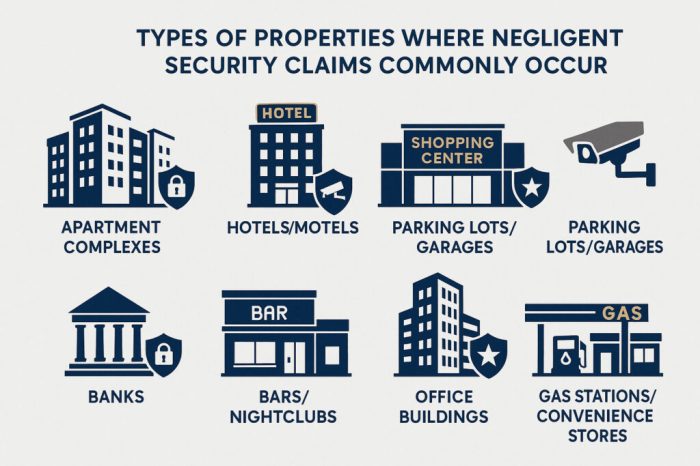
- A hotel that does not have proper lighting in the parking garage, leading to a guest being mugged.
Legal Principles
Property owners have a duty to maintain a safe environment for visitors, customers, and tenants. This duty includes taking reasonable precautions to prevent foreseeable criminal acts.
- Foreseeability: Property owners must anticipate the risk of criminal activity based on the location, history, and nature of the property.
- Standard of Care: Property owners are expected to implement security measures that are reasonable and appropriate for the circumstances.
- Causation: It must be shown that the lack of adequate security measures directly contributed to the harm suffered by the victim.
Determining Liability in Negligent Security Cases

Determining liability in negligent security cases involves analyzing various factors to establish the property owner's responsibility for the criminal acts that occurred on their premises.One key factor in determining liability is whether the property owner knew or should have known about the potential for criminal activity on their property.
If the property owner was aware of previous incidents or had reason to believe that their property was at risk, they may be held responsible for failing to take adequate security measures.Another important consideration is whether the property owner took reasonable steps to prevent criminal acts from occurring.
This can include measures such as installing proper lighting, security cameras, or hiring security personnel. Failure to implement these security measures can strengthen a claim of negligent security.Key evidence that can support a claim of negligent security includes incident reports, security footage, witness statements, and any history of criminal activity on the property.
This evidence can help establish that the property owner did not fulfill their duty to provide a safe environment for visitors and tenants.
Examples of Key Evidence
- Incident reports detailing previous criminal activities on the property
- Security camera footage showing inadequate security measures
- Witness statements confirming lack of security presence or response
- Records of complaints or concerns raised by tenants or visitors regarding safety
Role of Property Owners in Preventing Criminal Acts
Property owners have a legal obligation to ensure the safety and security of individuals on their premises. This includes taking proactive steps to prevent criminal acts that could harm visitors or tenants.
Responsibilities of Property Owners
- Implementing adequate security measures such as surveillance cameras, proper lighting, and alarm systems.
- Regularly maintaining and inspecting security equipment to ensure it is functioning properly.
- Hiring trained security personnel or contracting with security companies to patrol the property.
- Conducting background checks on employees and tenants to prevent potential security risks.
Common Security Measures
- Installing secure locks on doors and windows to prevent unauthorized access.
- Securing parking areas with gates, barriers, and surveillance cameras.
- Implementing access control systems to restrict entry to certain areas of the property.
- Posting signs warning of security measures in place, such as video surveillance.
Proactively Preventing Criminal Acts
- Creating a security plan tailored to the specific risks and needs of the property.
- Training staff and tenants on security protocols and emergency procedures.
- Regularly reviewing and updating security measures in response to changing circumstances or threats.
- Establishing communication channels for reporting security concerns or incidents promptly.
The Legal Process of Suing Property Owners for Negligent Security
When pursuing a lawsuit against a property owner for negligent security, there are specific steps involved in the legal process. Victims of criminal acts due to inadequate security measures must navigate through these steps to seek justice and compensation.
Role of Attorneys in Representing Victims
Attorneys play a crucial role in representing victims of criminal acts resulting from negligent security. They provide legal expertise, guidance, and advocacy throughout the legal process. Attorneys help victims gather evidence, build a strong case, negotiate with property owners or their insurance companies, and represent them in court if necessary.
Potential Outcomes of Lawsuits
The potential outcomes of lawsuits against property owners for negligent security can vary. If the victim successfully proves that the property owner failed to provide adequate security measures, they may be entitled to compensation for damages such as medical expenses, lost wages, pain and suffering, and more.
On the other hand, property owners may face financial liabilities, reputational damage, and potential changes in security protocols to prevent future incidents.
Outcome Summary

In conclusion, Negligent Security Attorney: Suing Property Owners for Foreseeable Criminal Acts sheds light on the nuanced legal landscape where victims seek justice for crimes that could have been prevented. It underscores the importance of accountability and proactive measures in ensuring safety within properties.
Essential Questionnaire
What are the common examples of situations where property owners can be held liable for foreseeable criminal acts?
Property owners can be held liable if they fail to provide adequate security measures, leading to criminal activities like assaults, robberies, or vandalism on their premises.
What are some key responsibilities of property owners in preventing criminal acts on their premises?
Property owners are responsible for maintaining proper lighting, security cameras, security personnel, and secure entry points to deter criminal activities.
What are the potential outcomes of negligent security lawsuits for both parties involved?
The outcomes can vary, but victims may receive compensation for damages while property owners may face financial penalties or be required to improve security measures.